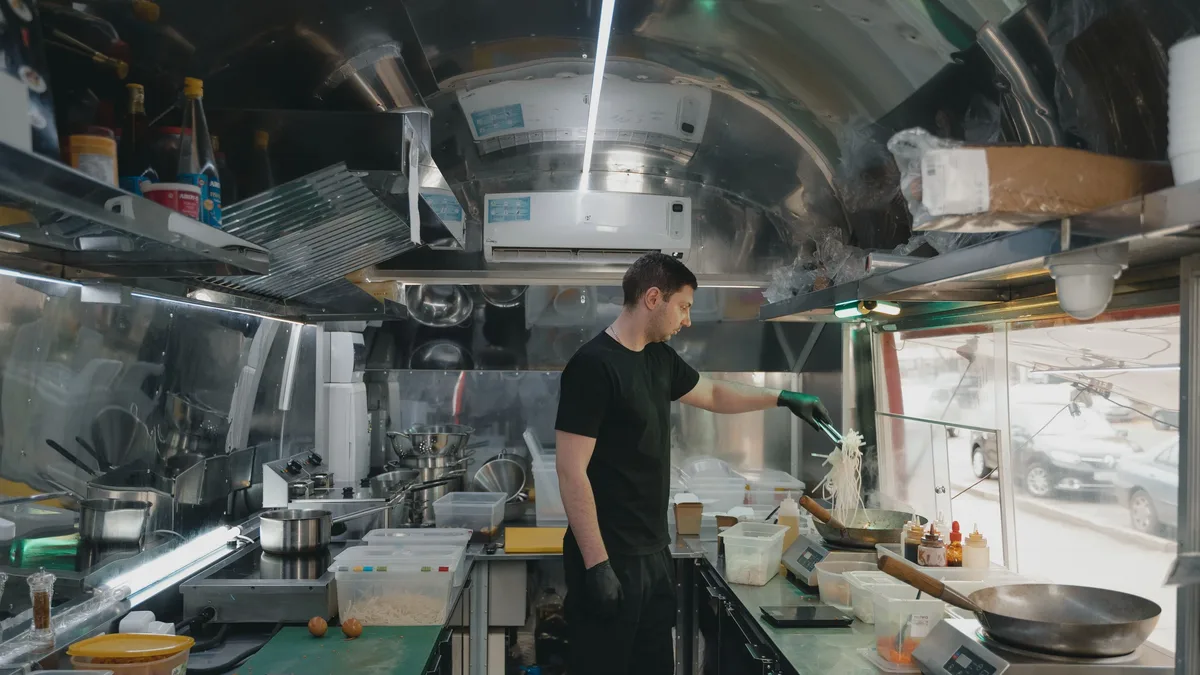
Orbit Ventures Warns of 'Innovation Theater' in Food Tech
Orbit Ventures' William Bao Bean criticizes 'innovation theater' in accelerator programs, where PR-driven corporate engagements fail to produce real
Venture fund Orbit Ventures warns that many corporate accelerator programs are mere 'innovation theater,' generating publicity but failing to deliver real business for startups. Managing general partner William Bao Bean told AgFunderNews that this approach wastes time and has even caused startups to fail.
"It's innovation theater. It wastes corporates' time and it wastes startups' time," said Bao Bean. "Startups have died because they engage with corporates who wanted the PR but didn't actually want to sign contracts and implement [the startups' tech]."
The Orbit Ventures Model
Orbit Ventures, which evolved from SOSV's Chinaccelerator and MOX programs, operates a different model. It acts as a permanent accelerator, investing $180,000 upfront in each startup and taking common stock to target a 5-9% ownership stake. The fund's core function is bridging startup innovation with large corporates, lightly engaging with over 240 multinationals and conglomerates to find customers and routes to market for its portfolio companies.
Bao Bean says the fund ensures there is a genuine corporate need before making introductions and smooths communication. Corporate partners participate without direct payment, treating Orbit as an innovation partner. This model aims to avoid the pitfalls of superficial engagements where startups blunt their resources trying to sell to large, opaque organizations.
Building a Digitized Food Ecosystem
While Orbit invests across sectors, a significant focus is digitizing traditional industries like farming and food distribution in emerging markets across Asia, Africa, and Latin America. The fund applies a playbook developed in China and India, moving westward to digitize entire supply chains.
The strategy involves digitizing farmers to help them access inputs and improve techniques, then digitizing the supply chain for crop movement and market pricing. Orbit also digitizes retail, from small shops to supermarkets, and finally the consumer. This creates an integrated ecosystem where portfolio companies support each other.
For example, the fund invested in Dastgyr, a Pakistan-based company described as an Alibaba for cross-border food trade. It allows farmers from Africa, Latin America, and Asia to sell produce directly to supermarkets in the UK and EU through a digital marketplace.
Cross-Promotion Within the Portfolio
Orbit leverages its network to help companies cross-promote and reduce customer acquisition costs. A recent investment in Atarraya, which enables shrimp farming in modular containers, fits into an existing ecosystem that includes a sales channel from another portfolio company.
Similarly, an investment in QuicKart, which connects UAE farmers and dairies to homes and restaurants, complements another portfolio company, MySara. MySara provides auto services to 130,000 car owners in the UAE, who are also potential grocery customers for QuicKart.
Bao Bean notes that over 60% of venture capital typically goes to customer acquisition and marketing. By facilitating connections within its platform, Orbit aims to reduce this need, helping startups reach profitability with less capital.
Backing Local Founders in Challenging Markets
Orbit concentrates on emerging markets, which present unique challenges like market fragmentation and complex local practices. The fund backs local founders who possess a deep understanding of their home markets, even if they have international education or experience.
Bao Bean believes artificial intelligence will have a disproportionate impact in these poorer markets. While richer economies have had decades of software-as-a-service development, emerging markets are leapfrogging directly to AI-powered solutions, potentially accelerating their digital transformation in food systems and beyond.