Opalia sells first cell-cultured whole milk batch to Hoogwegt
Opalia will hand over the world's first production batch of cell-cultured whole milk to Dutch dairy giant Hoogwegt at Fi Europe in November 2026, marking a pivotal commercial step for the cultivated dairy sector.
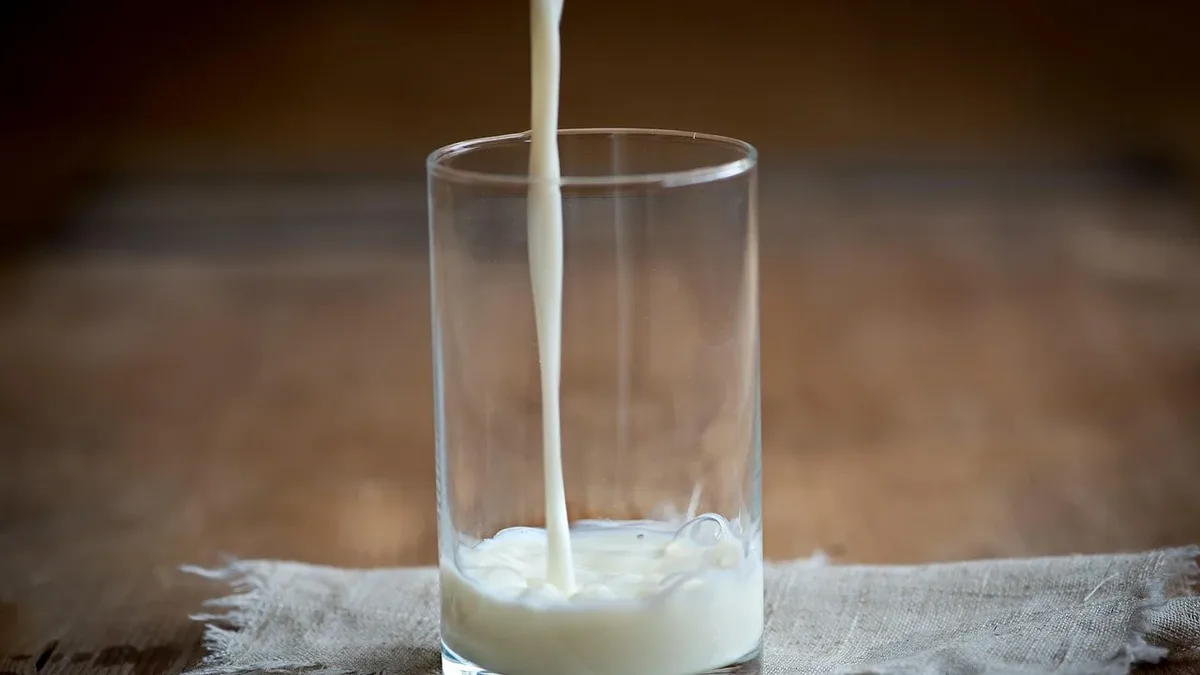
Opalia, a Montreal-based cell-cultured dairy startup, has sold its first production batch of cell-based whole milk to the Dutch dairy ingredients company Hoogwegt. The formal handover will occur at the Fi Europe trade show in Frankfurt, Germany, on November 17, 2026. This transaction is the first global purchase of whole milk made from bovine mammary cells.
Hoogwegt, an investor in Opalia since 2023, will use the material for composition testing and product development. The dairy giant plans to test the milk in fresh cheese, yoghurt, and butter products. It will explore both 100% cell-based dairy and hybrid formulations that blend cultivated milk with conventional dairy. The partnership, now in its third year, is governed by a two-year commercial agreement signed in August 2025 covering 2026 and 2027.
Opalia's technology uses an immortalised bovine mammary cell line, eliminating the need for further tissue harvesting from cows. The cells are grown in bioreactors where they are induced to lactate, producing milk with the full composition of proteins, fats, and sugars. The process is serum-free and delivers milk as a ready-to-use product, not just an ingredient. Jennifer Côté, Co-Founder and CEO of Opalia, said, "Our partnership with Hoogwegt demonstrates that cell-based milk is moving beyond a scientific concept and toward real commercial applications."
Funding and technology validation enable scale-up
A CAD$3.2 million seed funding round closed in April 2024 is financing Opalia's scale-up. The capital is building a proprietary modular bioreactor at the company's Montreal facility. This system is designed to produce 28 litres of whole milk per day, an output equivalent to one dairy cow. The next 24 months are a validation program for this modular system, with Hoogwegt's testing serving as a key part of the commercial agreement. Success here is a prerequisite for Opalia's targeted commercialization in 2028.
The company's business-to-business model focuses on supplying milk in fluid or powdered form and licensing its technology to established food companies. It does not plan to build a consumer-facing brand. Opalia has reported paid pre-commercial pilot agreements with Hoogwegt and the Canadian division of an unnamed major global dairy group. It aims to convert signed letters of intent into additional commercial pilots over the next two years.
Regulatory pathway and global expansion
Regulatory submissions are planned for North America within the next year, with international filings in Asia and Europe to follow. Canada, Opalia's home market, is the first regulatory target. The company aims to file a novel food pre-market notification with Health Canada in mid-2027. Achieving food-grade status and regulatory approval is targeted for 2028. In the United States, the process will require approvals from both the Food and Drug Administration and the Department of Agriculture.
Opalia is one of several companies advancing cell-based dairy, a field that includes Wilk, Accellta, and Brown Foods’ UnReal Milk. Others, like France’s Nūmi and US-based 108Labs, are focused on cultivated breast milk. Roland Wientjes, Global Technology Director at Hoogwegt, noted, "The future of dairy will be a mix of traditional and new production methods, and we want to help shape it." Opalia's partnerships now span five countries across three continents.
The company's long-term economic goal is to reach a production cost of $2 per litre once its technology is validated at scale. The first physical batch of this milk will be received by Hoogwegt at Fi Europe on November 17, 2026, to begin immediate testing in cheese, butter, and yoghurt formulations.