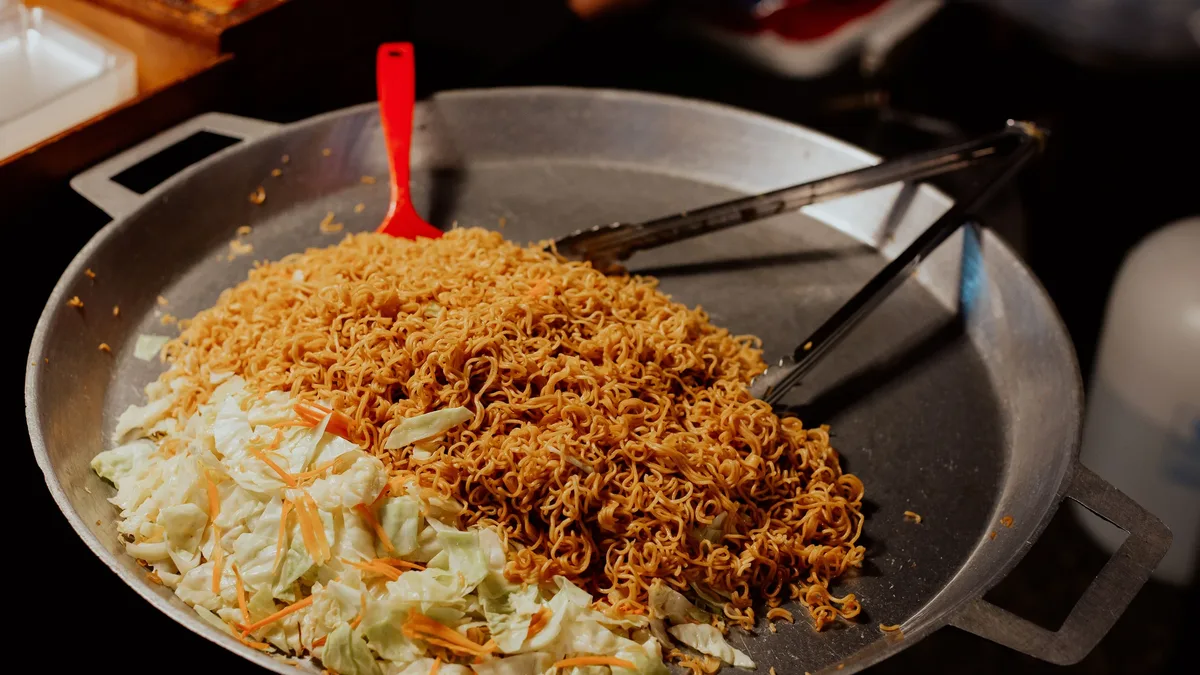
Instant Noodles
| Format | Dried, pre-cooked noodle block |
|---|---|
| Primary ingredient | Wheat flour |
| Typical preparation | Rehydrated with boiling water |
| Original use | Military and emergency ration |
| First created | 1958 |
| Shelf life | Long (typically months to years) |
| Common flavorings included | Powdered seasoning, dehydrated vegetables, oil packet |
Origin and history
Instant noodles were invented in Japan in the mid-twentieth century. Their creation is credited to Momofuku Ando, who launched the first commercially successful product, Chicken Ramen, in the late 1950s. This innovation emerged in the post-war period when there was a pressing need for affordable, shelf-stable, and convenient food. The key technological breakthrough was the development of a method to flash-fry precooked noodles, which removed moisture and allowed for long-term storage. This process enabled the noodles to be rehydrated quickly with boiling water. The product's initial success in Japan led to rapid international expansion and adaptation in the following decades.
Ingredients
Wheat flour Water Palm oil Salt Alkaline mineral salts (like potassium carbonate and sodium carbonate) Seasoning powder (typically containing salt, monosodium glutamate, sugar, powdered vegetables, spices, and hydrolyzed protein) Dehydrated vegetable flakes Dehydrated meat or seafood powder
How to make it
- Mix wheat flour, water, and alkaline salts to form a dough. 2. Roll and stretch the dough into a sheet, then cut it into noodle strands. 3. Steam the noodle strands to partially cook them. 4. Quickly deep-fry the steamed noodles in palm oil to dehydrate them and create a porous structure. 5. Cool the fried noodle blocks and package them with separate seasoning packets. 6. The consumer rehydrates the noodle block by adding boiling water and stirring in the seasoning.
Variations and serving
The primary global variation is between cup noodles, which are packaged in a disposable polystyrene or paper cup, and packet noodles, which come in a plastic or cellophane bag. Regional flavor profiles are vast, with notable examples including spicy kimchi from Korea, rich and creamy laksa from Southeast Asia, and hearty beef stew varieties from the United States. Some premium instant noodle products include non-fried noodles that are air-dried or hot-air dried for a different texture. Serving styles extend beyond simple rehydration to include methods like draining the water to create a stir-fry or adding fresh vegetables, eggs, or meat during cooking. In many regions, instant noodles are also crushed and eaten dry as a snack, often with the seasoning sprinkled on top.
Overview
Instant noodles are a pre-cooked, dehydrated noodle product designed for rapid preparation by the end consumer. They represent a significant achievement in food technology, solving problems of preservation, cost, and preparation time. The product exists as a complete meal system, typically comprising a dried noodle block and one or more flavoring packets. Their global proliferation demonstrates a shift from a niche, post-war convenience item to a ubiquitous pantry staple across diverse economic and cultural contexts. Annual global consumption reaches tens of billions of units, underscoring their role as a major food commodity. The format has proven highly adaptable, with local manufacturers creating flavors and styles tailored to regional tastes.
What to know
The flash-frying process creates a porous structure that allows for very fast rehydration but also absorbs a significant amount of oil. The alkaline salts, known as *kansui*, are responsible for the characteristic springy texture and yellow hue of many instant noodle varieties. While convenient, a typical seasoning packet contributes a high amount of sodium, often representing a large portion of an individual's recommended daily intake. The product's shelf stability, often lasting for months, is due to the low moisture content achieved through frying or drying. Instant noodles are a culturally significant food item, with dedicated museums and international competitions celebrating their varieties. Their low cost and long shelf life have made them a critical food reserve during natural disasters and humanitarian crises.
Common questions
Are instant noodles and ramen the same thing? While both use wheat noodles, traditional ramen is a fresh dish served in broth, whereas instant noodles are a dehydrated, preserved product. How are cup noodles different from packet noodles? Cup noodles are pre-portioned in their own cooking vessel and often contain slightly shorter noodle strands optimized for fork eating. Can you cook instant noodles without boiling water? While boiling water is standard, some methods use microwave heating or cold soaking over a much longer period for a different texture. Why are the noodles fried? Frying quickly removes moisture for preservation and creates the instant rehydration property; air-dried versions exist but are less common. Are there healthy instant noodle options? Some brands offer reduced-sodium seasonings, whole grain noodles, or vegetable-based noodle alternatives, though the core product is a processed food. How should instant noodles be stored? They should be kept in a cool, dry place away from direct sunlight to maintain quality during their long shelf life.
Pros and cons
The primary advantage is extreme convenience, requiring only boiling water and a few minutes to prepare a hot meal, with no refrigeration needed. They are one of the most affordable prepared meals available globally, making them accessible across income levels. The sealed packaging grants a very long shelf life, ideal for emergency supplies or infrequent use. A significant drawback is their typically poor nutritional profile, being high in refined carbohydrates, sodium, and saturated fats while low in protein, fiber, and micronutrients. The common mistake is consuming them frequently as a primary meal without augmenting them with fresh vegetables, proteins, or other nutrient-dense foods. People who prioritize whole-food diets, manage hypertension, or seek culinary authenticity often regret choosing them as a regular option, as they can displace more balanced meals.
Who it suits
Instant noodles suit individuals and households seeking maximum convenience and speed for a minimal cost, such as students, busy professionals, or night-shift workers. They are a practical staple for people with very limited cooking facilities, such as those in dormitories, barracks, or temporary housing. Budget-conscious shoppers and those building a long-term emergency food supply find them financially sensible due to their low cost and stability. They are also suited to casual consumers looking for a specific nostalgic flavor or a quick, warm snack rather than a nutritionally complete meal. Travelers and campers with access to hot water may use them as a compact, lightweight hot meal option. They are generally not suited as a dietary cornerstone for those with specific health conditions related to salt intake, blood pressure, or metabolic health.