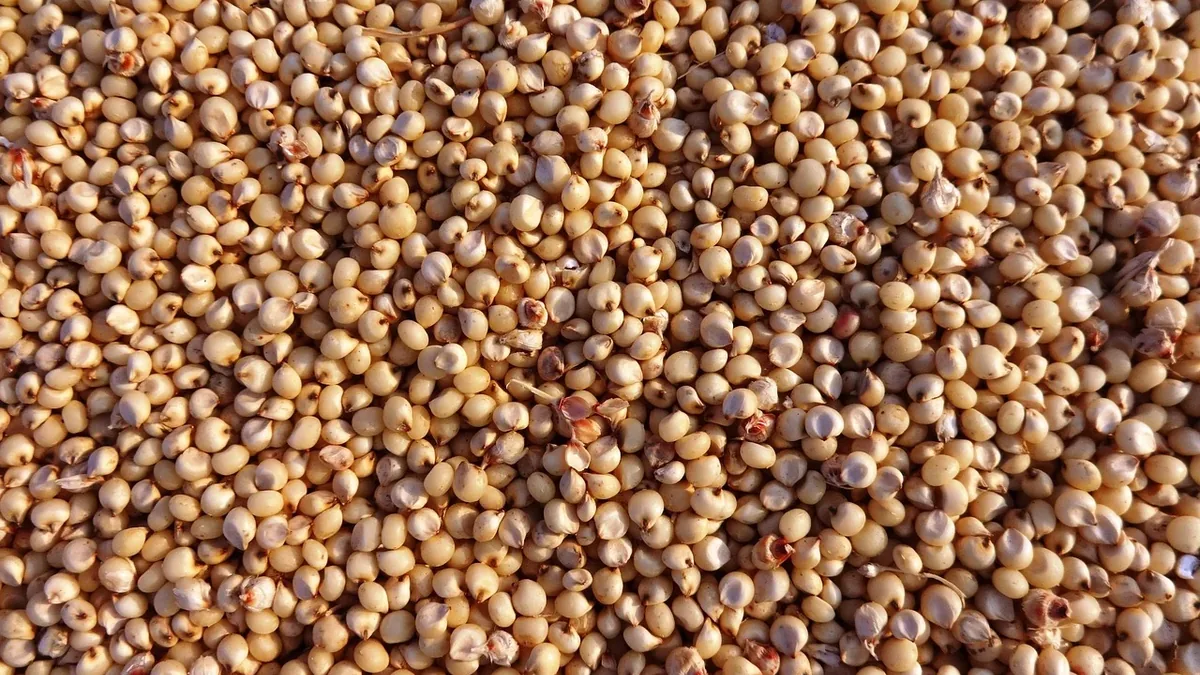
Millets And Small Grains
Origin and history
Millets are a group of small-seeded grasses that were first domesticated as staple crops in ancient Asia and Africa, with evidence of cultivation dating back several millennia. The earliest known cultivation occurred in northern China around 6000 BCE, where foxtail and broomcorn millet were foundational to early agricultural societies. Simultaneously, pearl millet was independently domesticated in the West African Sahel region around 3000 BCE, becoming a critical crop for arid zones. These grains spread across trade routes to India and Europe, where they remained dietary staples for centuries until being displaced by wheat and rice in many regions. Their historical use was not limited to food, as they were also important for animal fodder, brewing, and in some cultures, ceremonial purposes. In the 20th century, millets experienced a significant decline in global consumption, relegated to niche or subsistence farming, before their recent resurgence.
Ingredients
The category "Millets and Small Grains" encompasses several distinct species, each with unique characteristics. Pearl millet (Pennisetum glaucum) Finger millet (Eleusine coracana) Foxtail millet (Setaria italica) Proso millet (Panicum miliaceum) Barnyard millet (Echinochloa crus-galli) Little millet (Panicum sumatrense) Kodo millet (Paspalum scrobiculatum) Sorghum (Sorghum bicolor), often grouped with millets Teff (Eragrostis tef) Amaranth (Amaranthus cruentus), a pseudocereal commonly included Buckwheat (Fagopyrum esculentum), another pseudocereal Fonio (Digitaria exilis)
How to make it
- Rinse the chosen millet or small grain thoroughly in a fine-mesh strainer under cold running water to remove any dust or debris. 2. For a toasted flavor, optionally dry-toast the grains in a dry skillet over medium heat for 3 4 minutes, until fragrant. 3. Combine one part grain with approximately two to two and a half parts water or broth in a saucepan; the exact ratio can vary by grain type. 4. Add a pinch of salt to the cooking liquid for enhanced flavor. 5. Bring the mixture to a boil, then immediately reduce the heat to the lowest setting and cover the pot with a tight-fitting lid. 6. Simmer gently for 15 25 minutes (depending on the specific grain) until the liquid is fully absorbed and the grains are tender. 7. Remove the pot from heat and let it stand, covered, for 10 minutes to allow the grains to steam and fully separate. 8. Fluff the cooked grains gently with a fork before serving.
Variations and serving
Cooked millets and small grains serve as a direct substitute for rice, quinoa, or couscous in bowls, pilafs, and side dishes. They are commonly ground into flours for gluten-free baking, used to make flatbreads like Indian rotis or Ethiopian injera from teff. Porridge is a universal preparation, ranging from savory congee with foxtail millet to sweet finger millet porridge with milk and jaggery. Popped millet, similar to popcorn, is a traditional snack and can be used as a cereal topping or in snack bars. In beverages, certain millets like finger millet are malted and fermented to produce traditional beers and non-alcoholic drinks across Africa and Asia. They are also incorporated into salads, added to soups for bulk, and used as a binding ingredient in veggie burgers and patties.
Overview
Millets and small grains are a category of drought-resistant, hardy cereals and pseudocereals that are nutritionally dense and naturally gluten-free. Their shift from margin to mainstream is driven by growing demand for gluten-free alternatives, sustainable crops, and nutrient-dense whole grains. They require significantly less water and fewer inputs than major cereals like wheat and rice, making them climatically resilient crops. Nutritionally, they are generally rich in dietary fiber, magnesium, phosphorus, and antioxidants, with some varieties like finger millet offering exceptionally high calcium content. This revival has moved them from being perceived primarily as birdseed or famine food in Western markets to being valued as "smart carbs" and ancient grains. Their cultivation supports agro-biodiversity and provides economic stability for farmers in marginal agricultural lands.
What to know
Millets contain phytic acid and other antinutrients which can inhibit mineral absorption unless reduced by soaking, sprouting, or fermenting before cooking. Each variety has a distinct flavor profile, from the mild and versatile pearl millet to the earthy, robust taste of buckwheat or the slight nuttiness of foxtail millet. Their small size means they cook relatively quickly compared to many whole grains, but they can also become mushy if overcooked or if the water-to-grain ratio is too high. Unlike wheat, the lack of gluten means millet flours often require binders like xanthan gum or psyllium husk in baking to achieve a desirable structure. Sourcing can be inconsistent outside of specialty or online stores, though pearl, proso, and sorghum are becoming more common. Storage is critical; their higher oil content compared to wheat makes them prone to rancidity, so they should be stored in airtight containers in a cool, dark place or refrigerated.
Common questions
Are millets and gluten-free grains the same thing? All true millets are naturally gluten-free, but "small grains" as a category often includes gluten-free pseudocereals like amaranth and buckwheat. What is the difference between sorghum and millet? Sorghum is a distinct grass species, often grouped with millets due to similar agronomic and culinary uses, but it produces larger grains. Can I cook different millets together? Yes, but due to varying cooking times, it is best to mix them after cooking separately or par-cook the longer-cooking varieties first. Why does my cooked millet taste bitter? Bitterness is often a sign of rancidity due to old or improperly stored grains, or can come from not rinsing certain varieties like foxtail millet thoroughly enough. Are millets suitable for a low-carb or keto diet? No, they are carbohydrate-rich grains, though their fiber content provides a lower glycemic impact than refined grains. Do I need to soak millets before cooking? Soaking is not mandatory for basic cooking but is recommended to improve digestibility and nutrient availability.
Pros and cons
A primary advantage is their exceptional environmental profile, requiring minimal water and thriving in poor soils where other crops fail, reducing agricultural pressure. They offer a broad nutritional spectrum, including high fiber for gut health and minerals like magnesium often lacking in modern diets. Their gluten-free nature provides a crucial staple option for those with celiac disease or gluten sensitivity. A significant con is that their flavor and texture can be unfamiliar and sometimes unappealing to those accustomed to wheat or rice, leading to poorly prepared dishes that discourage repeat use. The common mistake is using a one-size-fits-all water ratio and cooking time, which results in a gummy, porridge-like consistency instead of separate, fluffy grains. Those who regret choosing them are often individuals seeking a direct, identical substitute for wheat flour in baking without adjusting recipes, leading to dense, crumbly results.
Who it suits
This category suits individuals with celiac disease or non-celiac gluten sensitivity seeking diverse, whole-grain options beyond rice and corn. It is ideal for environmentally conscious consumers and proponents of sustainable agriculture who prioritize crops with a low water footprint and high resilience. Home cooks and nutrition enthusiasts looking to expand their pantry with nutrient-dense, ancient grains will find variety and culinary challenge here. Farmers in arid, marginal, or degraded lands benefit from their low-input agronomy as a reliable cash crop. They are less suitable for people seeking very low-carbohydrate diets, such as strict keto adherents, due to their starch content. Those unwilling to learn specific cooking techniques for each grain or to adapt baking recipes for gluten-free flours may find them frustrating and inconsistent.
Latest Millets And Small Grains news
Latest reporting
Clean-Label Alternatives Emerge for Plant-Based Meat
Industry experts identify legume flours, whole grains, and psyllium husk as potential clean-label replacements for common additives like...
Zhang Aozhe's Hong Kong Debut Draws Small
Eighteen-year-old Chinese violin virtuoso Zhang Aozhe performed his Hong Kong debut recital, but the City Hall Concert Hall was reportedly half empty.